The moment a customer steps into a store, their senses are immediately engaged, and their shopping behavior begins to form. The lighting, layout, colors, textures, and even ambient sounds subtly influence how they feel, where they go, and what they buy. This is the power of retail store interior design today. Far beyond simple decoration, it is a strategic tool that shapes perception, guides movement, and fosters emotional connections with the brand. Retailers who understand the psychology behind store design create not just visually appealing spaces, but immersive experiences that encourage exploration, increase dwell time, and ultimately boost sales. In today’s highly competitive retail landscape, the design of a store can be as critical to its success as the products it sells.
Layout and Traffic Flow
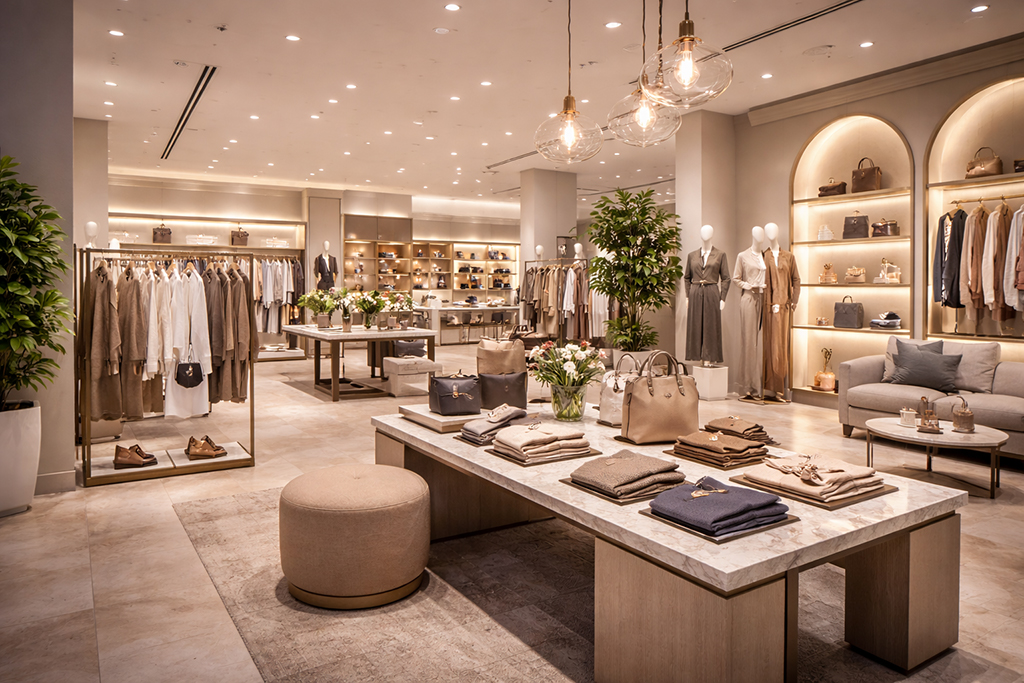
The layout of a store is one of the most important aspects of interior design in shaping customer behavior. How aisles are arranged, how products are displayed, and how shoppers move through the space all affect buying decisions. A well-planned layout directs traffic efficiently, guiding customers past key displays and high-margin items while minimizing confusion. Stores that use racetrack or free-flow layouts allow customers to explore at their own pace, often increasing exposure to products and prompting impulse purchases. In contrast, disorganized layouts can frustrate shoppers and limit product discovery. Clear sightlines, spacious aisles, and logical pathways make the shopping experience comfortable and intuitive, which encourages longer visits and more transactions.
Lighting, Color, and Atmosphere
Lighting is one of the most effective tools retailers have to influence perception and behavior. It can highlight featured products, create focal points, and set the overall mood of the space. Bright lighting energizes customers and promotes a sense of activity, while warmer, softer lighting encourages slower browsing and a more relaxed shopping experience. Color psychology further enhances these effects. Different hues evoke distinct emotional responses: red can stimulate urgency, blue conveys trust, and warm tones create a welcoming atmosphere. When lighting and color are aligned with a brand’s identity, the store environment feels cohesive and professional, increasing shopper confidence and perceived product value.