King’s College School Nassau: educational architecture between climate, landscape and community
SAOTA's new campus in the Bahamas redefines learning spaces with a sustainable, open project deeply rooted in the local context
Pubblicato il:
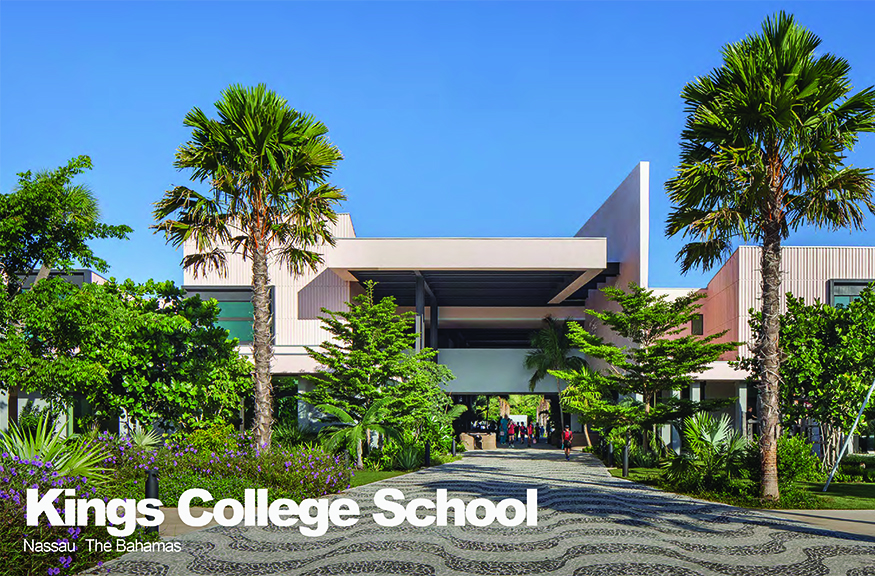
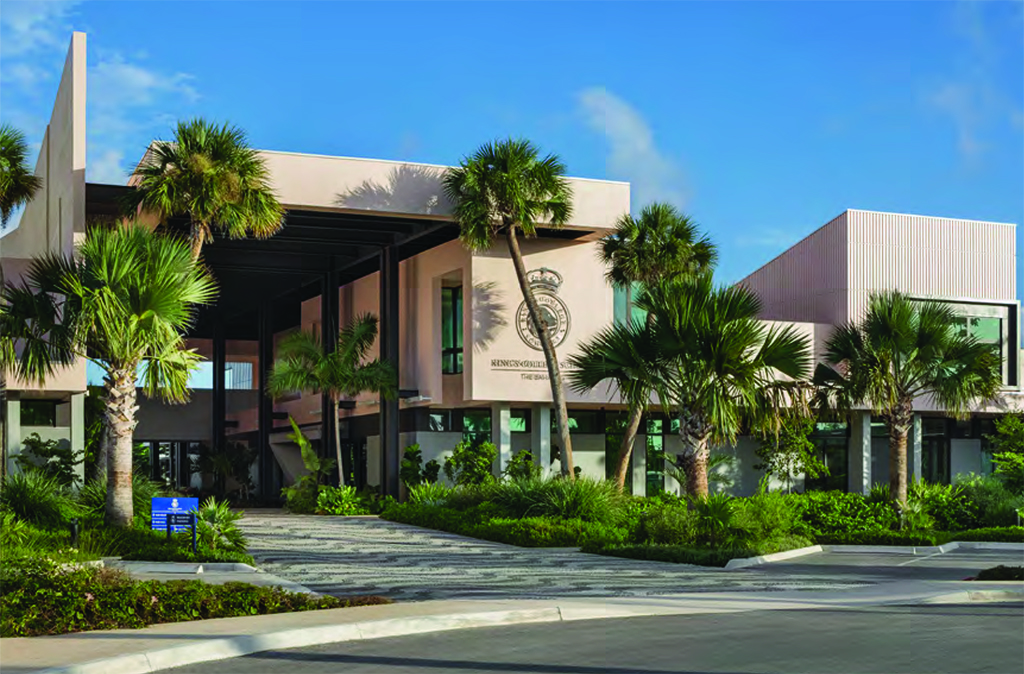
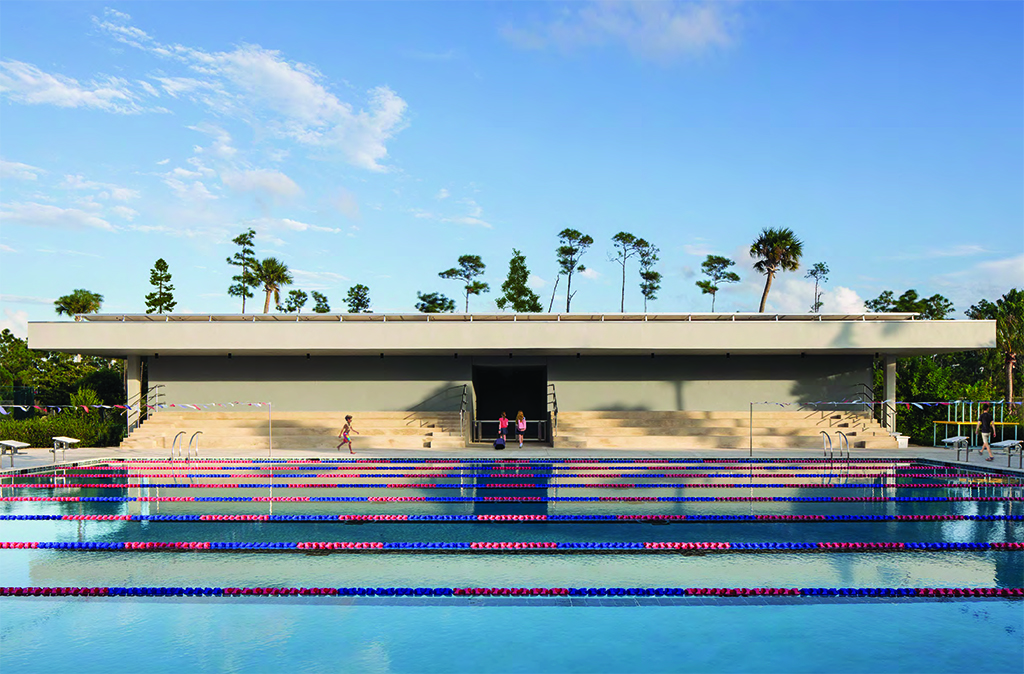
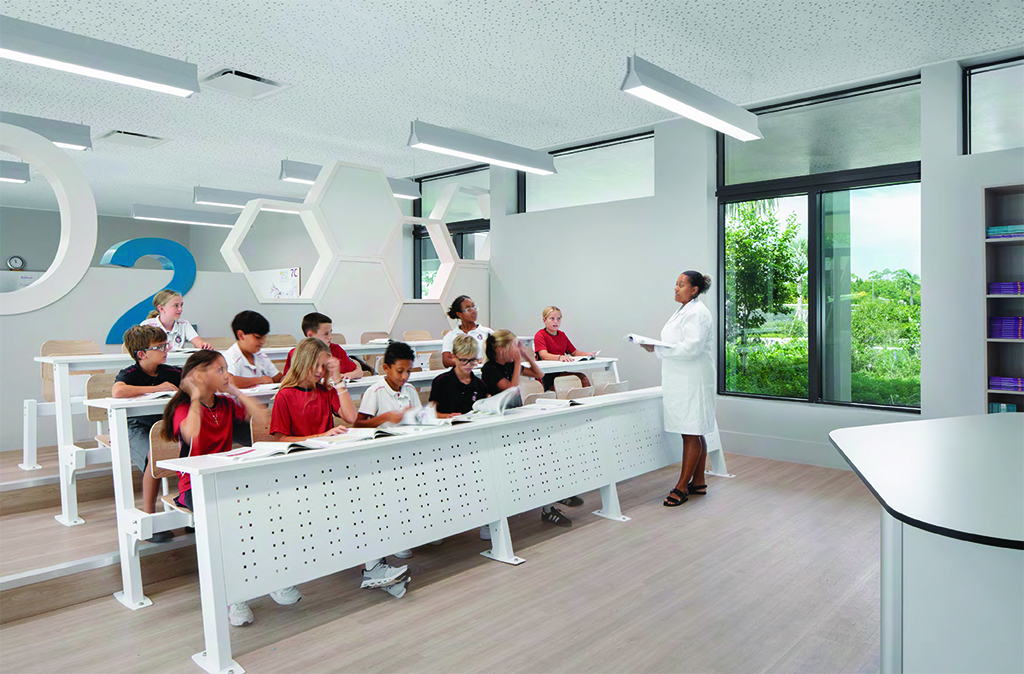
Designing a school today means going beyond the simple functionality of spaces: it means creating environments that promote relationships, well-being and learning connected to the place. It is in this perspective that King’s College School was born in Nassau, Bahamas, a campus that reinterprets educational architecture in a contemporary, climatic and community key. Designed by SAOTAfor the Inspired Education group, the project proposes a vision in which building, landscape and local culture become an integral part of the educational experience.
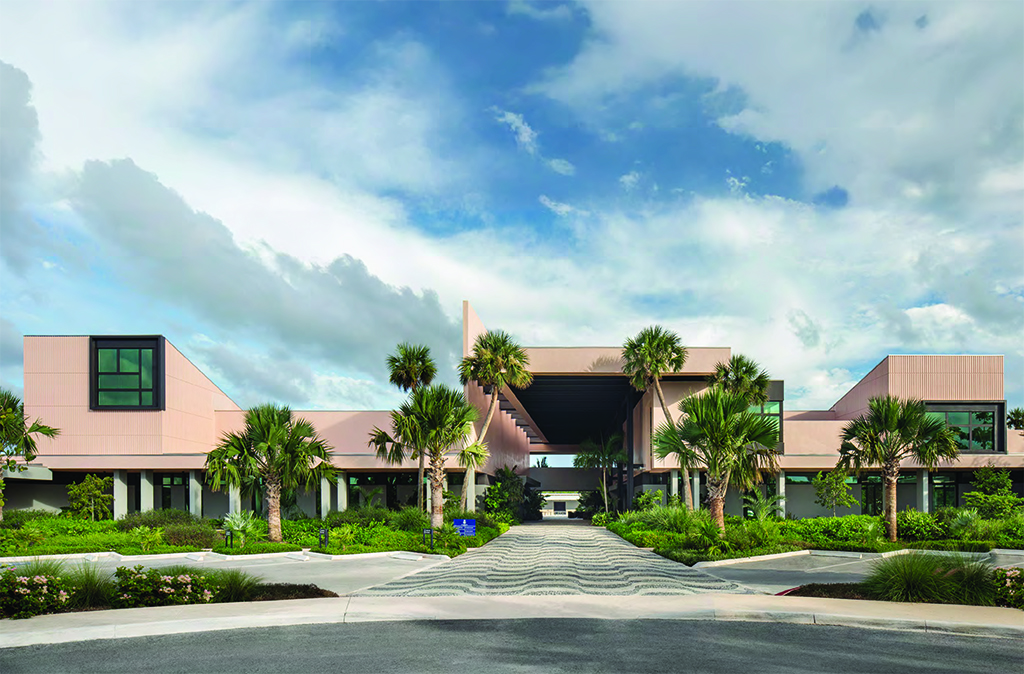
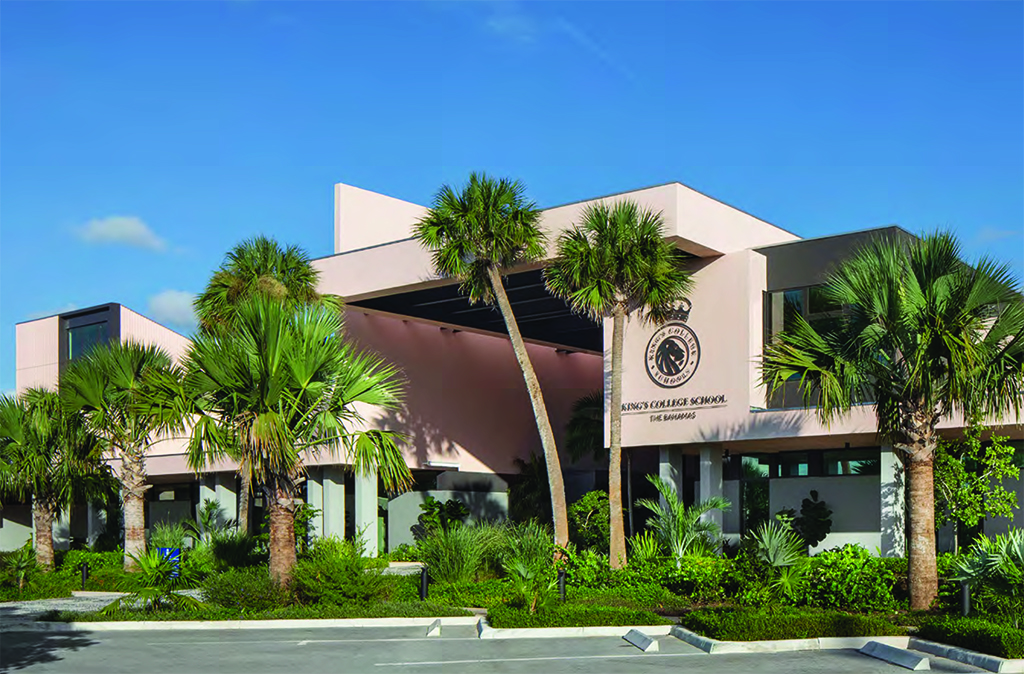
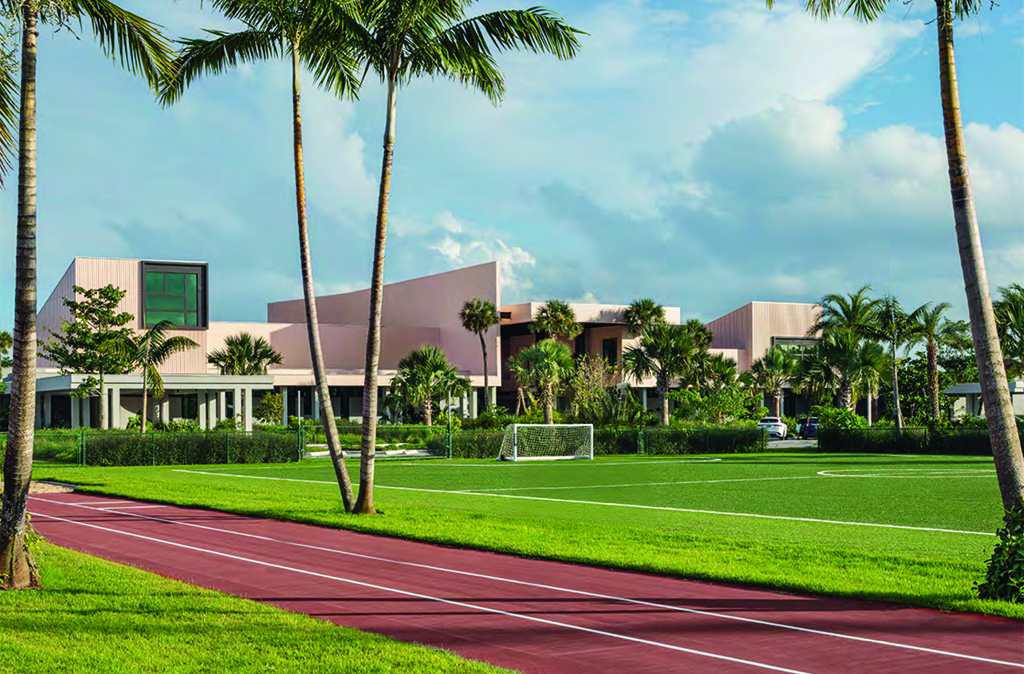
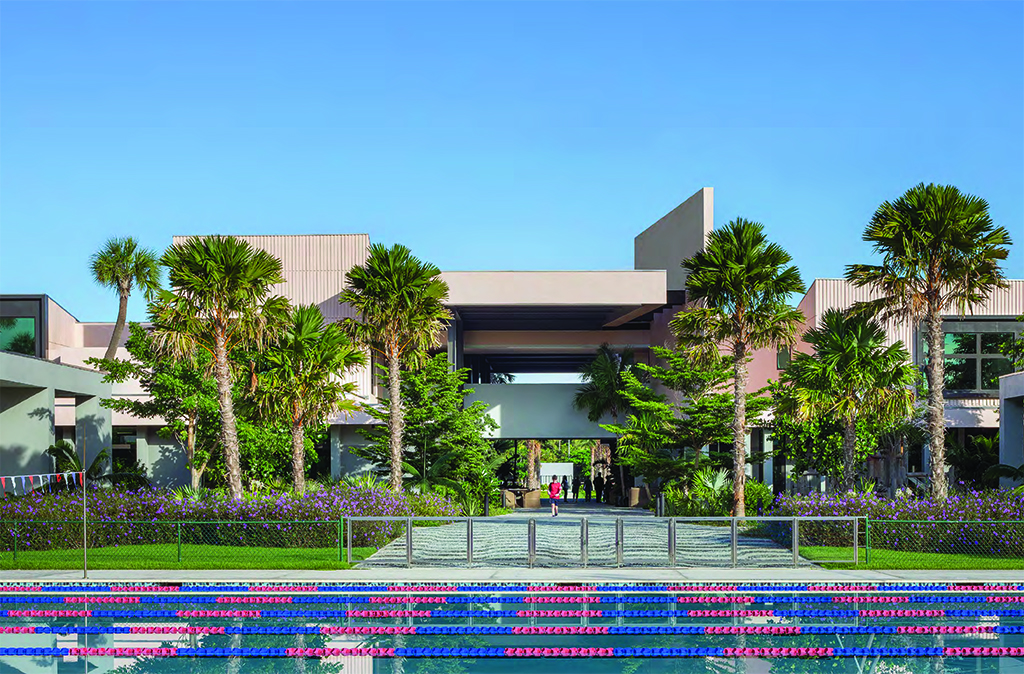
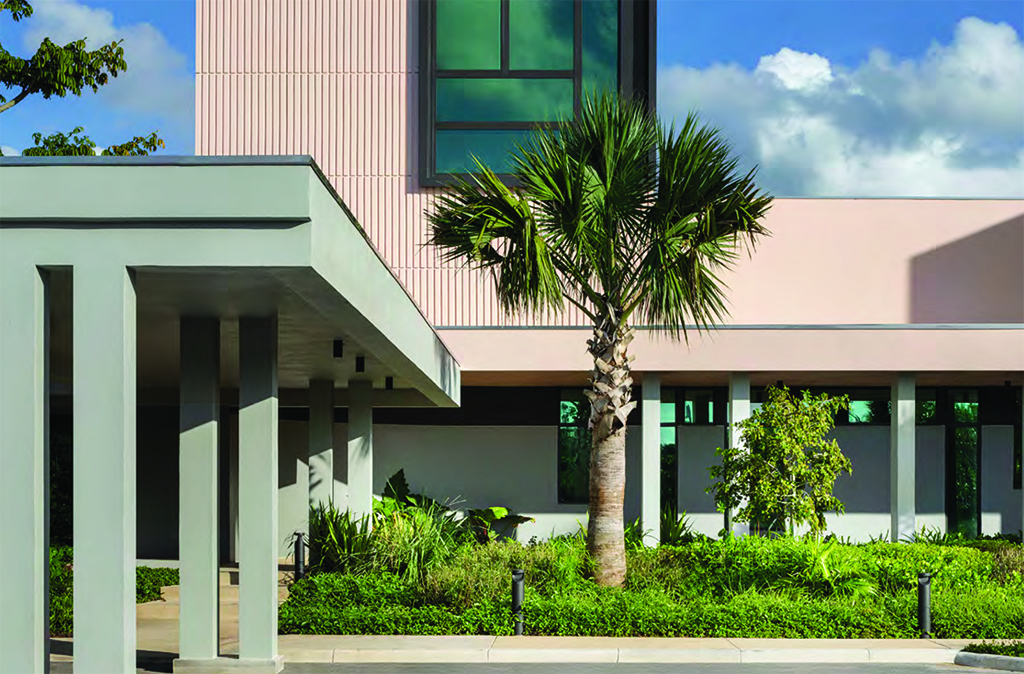
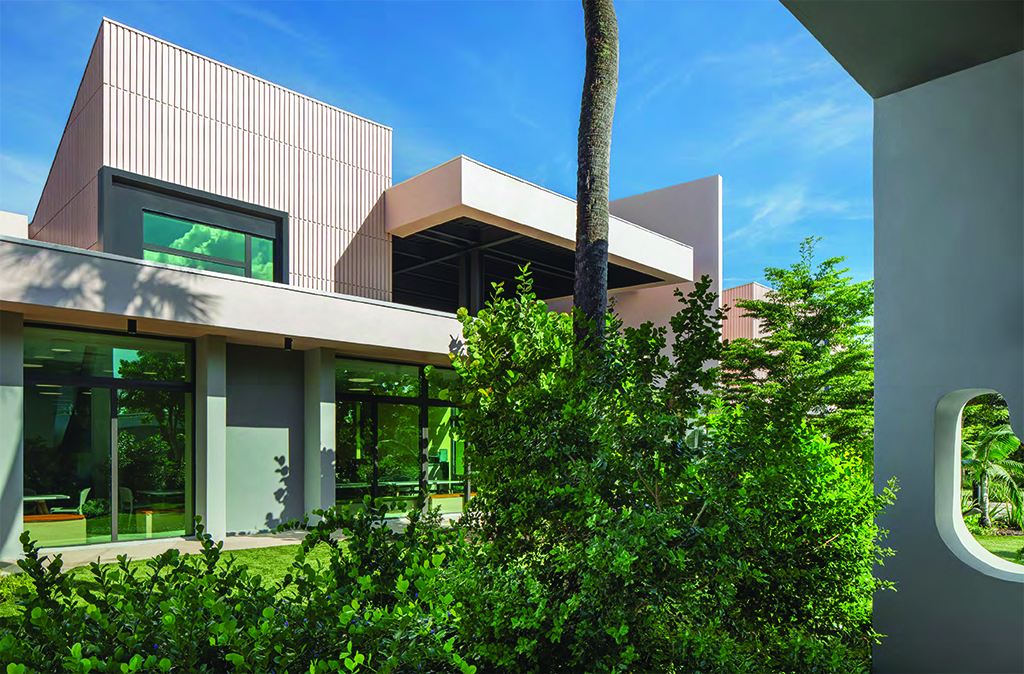
Traditionally, Caribbean schools have developed in symmetrical blocks, with classrooms facing outwards and protected by deep verandas. King’s College School subverts this scheme by introducing a basic continuous structure, a “plinth”, which unifies the campus and creates a network of connected spaces. On this platform, the volumes of the classrooms rise to different heights, generating an architectural rhythm that recalls the fragmentation of the Bahamian archipelago: a varied but coherent whole, like the islands that make up the territory.
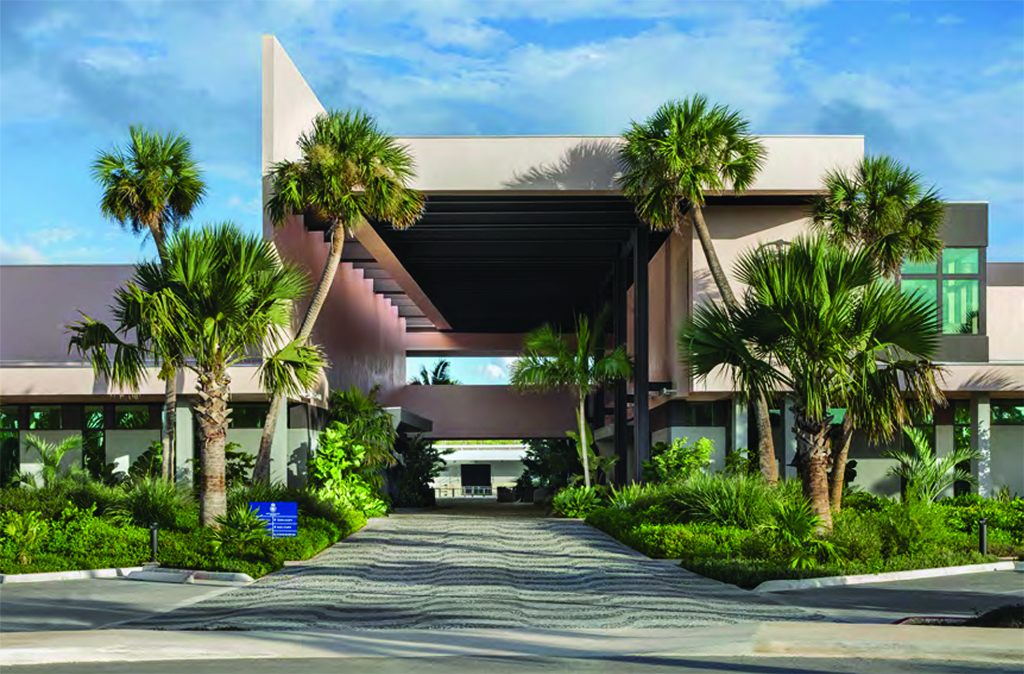
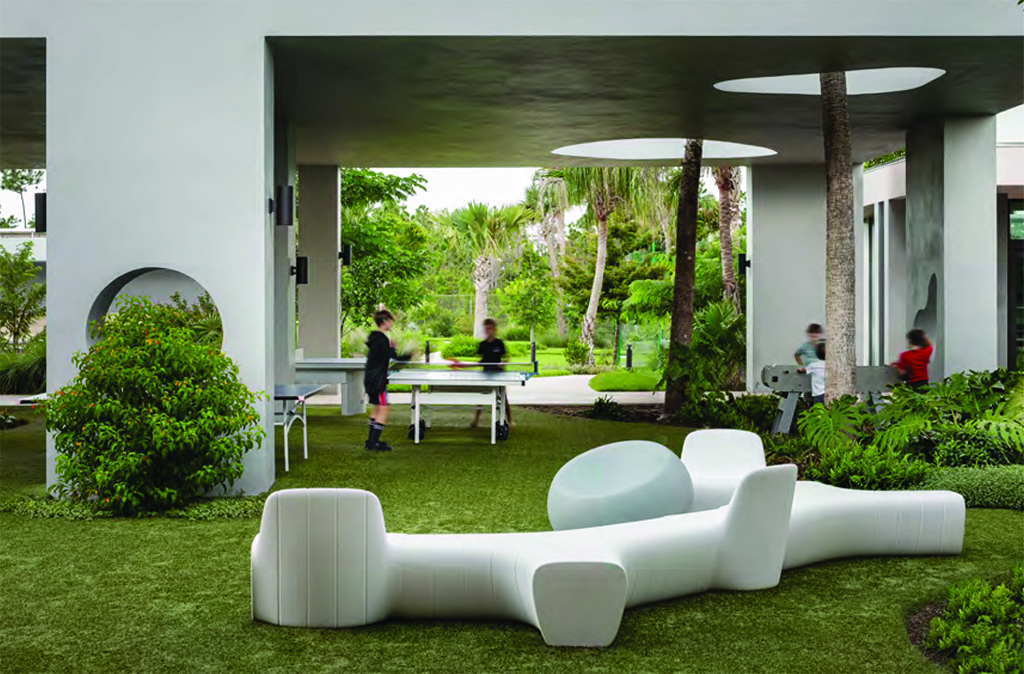
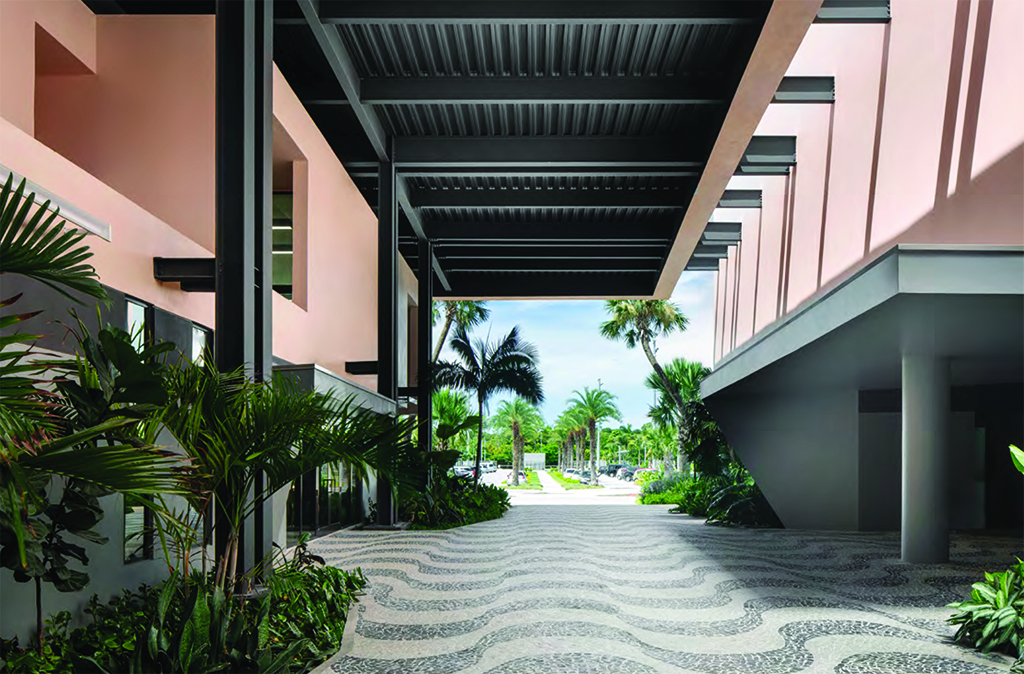
The project is strongly climate-responsive. Large overhanging roofs protect against tropical sun and sudden rains, while shaded corridors and outdoor pathways promote natural ventilation. Unlike traditional fully air-conditioned school buildings, the campus takes a passive and hybrid approach, taking advantage of covered courtyards and airflows to regulate temperature. The result is a reduction in energy consumption and a healthier and more engaging learning environment.
Galleria immagini
Materiality also contributes to the link with the context. The dark base recalls the depths of the ocean, while the upper levels lighten in shades inspired by local beaches and pastel architecture. Pigmented concrete floors with shell aggregates establish direct contact with the landscape, transforming every move into a sensory experience. The choice of resistant and durable materials also responds to the needs of a demanding climate and resilience criteria, which are essential in an area subject to intense weather events.
The landscape, designed by Raymond Jungles, is not a simple background, but a real educational device. Tropical vegetation, shaded courtyards and planted pathways dissolve the boundary between inside and outside, offering spaces that function as outdoor classrooms, meeting areas and natural cooling zones. This continuity reflects the social dimension of Bahamian communities, where movement, sharing and outdoor life are part of everyday life. King’s College School si configura come un “learning landscape”: un campus che integra architettura, clima e cultura per formare non solo studenti, ma cittadini consapevoli del proprio ambiente. Un modello di architettura scolastica sostenibile che dimostra come il progetto possa diventare strumento di benessere, appartenenza e qualità dell’esperienza educativa.