Window installation in Vancouver, WA: what to know before you buy
Smart window installation choices for Vancouver homeowners: improving energy efficiency, durability, and comfort in the Pacific Northwest climate
Pubblicato il:
Windows manage heat loss, control how much natural light enters a space, and play a significant role in how a home reads from the street. In Vancouver, WA, where wet winters and mild but damp conditions put constant pressure on building envelopes, the quality of your window installation matters as much as the product itself.
Why Vancouver’s Climate Makes This Decision More Important The Pacific Northwest isn’t forgiving on poorly sealed or underperforming windows. Persistent moisture and the sheer volume of rain Vancouver sees annually mean that windows with inadequate frames or improper installation will show problems fast. Condensation between panes, drafts along the sill, and rising heating bills are the early signs. Rot and water intrusion are what follow if those signs are ignored.
Choosing the right product for this climate isn’t just about aesthetics, though aesthetics matter too, especially for design-conscious homeowners. It’s about selecting a window system built for what the Northwest actually throws at it.
What to Look for in a Window for This Region Not all windows are manufactured to the same performance standard.
U-factor measures how well the window resists heat loss; lower is better, and anything at 0.30 or below is worth prioritizing for Pacific Northwest conditions.
Solar heat gain coefficient controls how much solar energy passes through the glass, which matters most for sun-exposed rooms.
Frame material is worth paying attention to, too: fiberglass and composite frames outperform vinyl in dimensional stability and longevity in high-moisture environments.
But the specification that gets the least attention is often the most important one: installation method. A quality product installed poorly still fails. Flashing, sealing, and integration with the existing wall assembly are where most window failures actually originate.
The Role of Window Installation in a Broader Exterior Refresh Windows rarely get replaced in isolation from other exterior decisions. If your siding is aging alongside your windows, addressing both in the same project makes practical sense because the exterior needs to be partially opened for window installation anyway, and coordinating siding installation Vancouver, WA jobs at the same time avoids redundant labor costs and ensures the entire envelope is sealed and finished consistently.
From a design standpoint, new windows and new siding chosen together produce a more cohesive result than updating one and leaving the other mismatched.
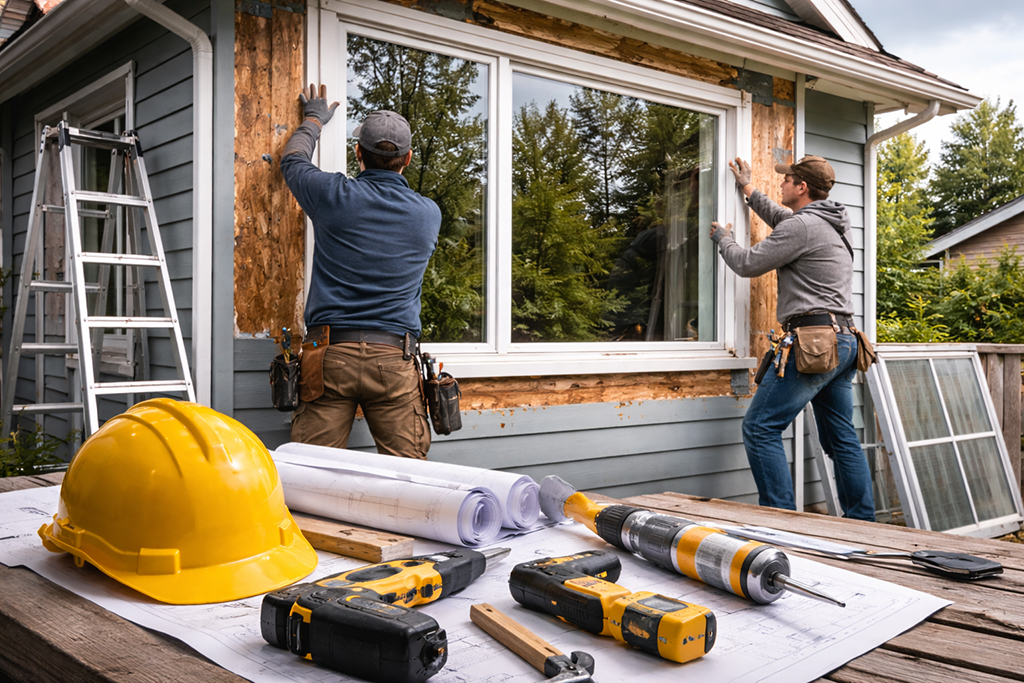
What the Installation Process Actually Involves A full window installation is a time-consuming job for most homes. It starts with a proper site assessment, measuring openings and checking for existing water damage or rot that needs to be addressed before a single window goes in. After that, the removal of existing parts is completed, and installation begins.
Custom-sized or special-order windows then typically require two to four weeks from order to delivery. Installation itself runs one to three days for most residential projects, followed by interior and exterior trim work, caulking, and paint touch-ups.
At the End of the Day The quality of your window installation comes down to who’s doing it and how seriously they take the prep work. Skipping the site assessment and jumping straight to a quote is a shortcut that costs you later. The right installer accounts for that upfront, builds it into the price, and doesn’t come back to you mid-project with a number you weren’t expecting. That’s the difference between a smooth installation and a stressful one.